
Modern medicine has become increasingly specialized. This has brought major advances in the diagnosis and treatment of individual diseases, but many adults do not experience their health as a collection of separate conditions.
A person may have diabetes, high blood pressure, heart disease and kidney problems at the same time. Another patient may be living with chronic respiratory disease while also developing an infection or experiencing complications related to another medical condition.
When several conditions occur together, understanding the whole clinical picture becomes particularly important.
This is one of the central principles of internal medicine.
When More Than One Condition Is Present
Many chronic medical conditions commonly occur together.
Diabetes may be accompanied by hypertension and cardiovascular disease. Kidney disease may develop alongside diabetes or heart disease. A person with chronic respiratory disease may also have cardiovascular problems or become more vulnerable to complications from infections.
These conditions do not necessarily exist independently.
One condition can influence another, while the treatment of one problem may need to take other conditions into consideration.
This creates a level of complexity that cannot always be addressed by looking at each diagnosis separately.
The Importance of the Whole Patient
A diagnosis provides important information, but it is only one part of a patient’s medical picture.
An internal-medicine approach considers the patient’s symptoms, medical history, medications, existing conditions, risk factors, examination findings and relevant investigations together.
For example, shortness of breath may have several possible causes.
It may be related to a respiratory condition such as COPD or severe asthma. It may also be associated with heart disease, an infection, anemia or other medical problems.
The symptom itself does not provide the complete answer.
Understanding the patient’s wider clinical circumstances helps guide the assessment.
How Conditions Can Interact
The interaction between medical conditions is one of the challenges of managing complex adult health.
A patient with diabetes and kidney disease, for example, may also have high blood pressure and an increased risk of cardiovascular disease.
Similarly, someone with heart failure may develop problems involving other organs as the illness progresses or may require careful consideration of fluid balance, kidney function and medications.
In patients with multiple conditions, changes in one part of the body can sometimes have consequences elsewhere.
This is why understanding relationships between diseases is an important part of comprehensive adult medicine.
The Challenge of Multiple Medications
Managing several medical conditions can also mean taking multiple medications.
Each medication may have an important purpose, but the overall treatment plan needs to be considered carefully.
Some medicines may affect kidney function, blood pressure, fluid balance or other aspects of health. Others may interact with medications being used for a different condition.
Medication review is therefore an important part of caring for patients with multiple medical conditions.
The aim is not simply to treat every diagnosis independently, but to consider how the overall treatment plan fits the individual patient.
Acute Problems in Patients With Chronic Disease
Complexity can become particularly important when an acute illness occurs in someone who already has chronic medical conditions.
An infection, for example, may have a very different effect on a person with heart failure, chronic kidney disease, diabetes or chronic respiratory disease than it would on an otherwise healthy individual.
The existing medical conditions can influence the patient’s response to illness, the symptoms they experience and the approach to treatment.
This is one reason why a patient’s previous medical history remains important when assessing a new problem.
Looking for the Underlying Picture
One of the challenges in adult medicine is determining whether several symptoms represent separate problems or are connected by a common underlying process.
Fatigue, weight changes, swelling, breathlessness, changes in exercise tolerance or recurrent illness can have many possible explanations.
A careful medical assessment looks at the pattern rather than focusing only on an individual symptom.
This may involve reviewing the patient’s history, performing a clinical examination and using appropriate laboratory or imaging investigations.
The objective is to build a clearer understanding of what is happening and why.
Individual Patients Require Individual Assessment
There is no single approach to complex adult health that applies equally to everyone.
Two people may have the same diagnoses but very different medical circumstances.
Age, previous illnesses, medications, lifestyle, kidney and liver function, cardiovascular health and other factors can all influence clinical decision-making.
For this reason, medical management needs to be individualized rather than based solely on the presence of a particular diagnosis.
The Role of Internal Medicine
Internal medicine is particularly concerned with the diagnosis and management of adult medical conditions and with understanding how those conditions relate to one another.
This broader perspective is valuable when patients present with multiple medical problems or when the cause of a patient’s symptoms is not immediately clear.
Rather than asking only, “What diagnosis does this patient have?”, the broader question becomes:
How do this patient’s different medical conditions fit together?
That perspective can help create a more complete understanding of the patient’s health.
Beyond a Single Diagnosis
Healthcare is sometimes organized around individual diseases and specialties, but patients themselves are not divided into separate systems.
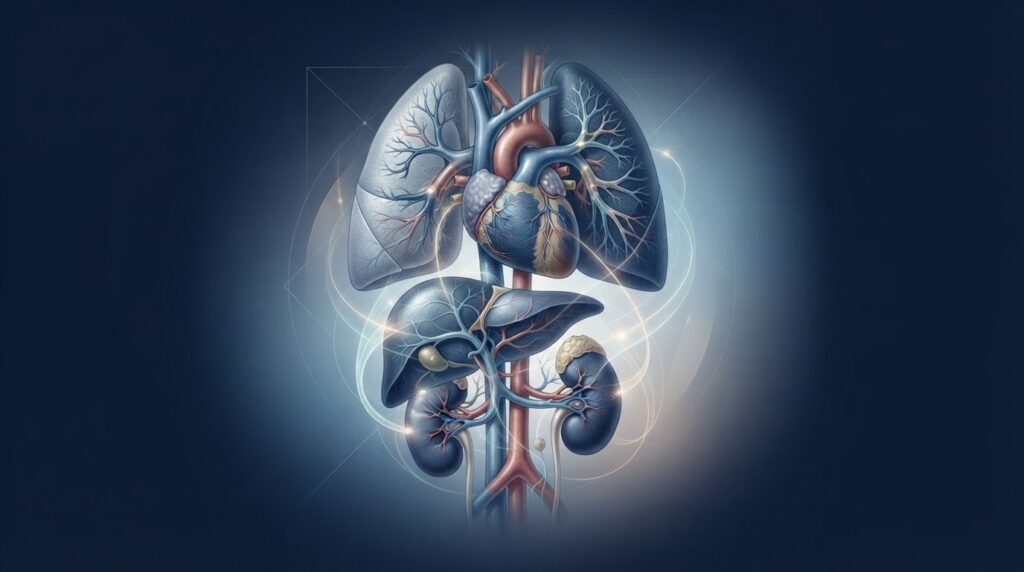
The heart, kidneys, lungs, liver and other organs function as parts of the same body.
When several conditions are present, understanding their relationships becomes an important part of medical care.
This is why complex adult medicine requires not only knowledge of individual diseases, but also the ability to consider the patient as a whole.
A Broader Perspective on Adult Health
Dr. Darw Manuel Guevara’s interest in internal medicine reflects this broader approach to adult health.
His professional interests include cardiovascular disease and heart failure, chronic respiratory diseases, liver and metabolic disease, autoimmune and inflammatory conditions, infectious diseases and the management of complex medical conditions.
Across these areas, a common theme is the relationship between conditions rather than viewing each diagnosis entirely in isolation.
Understanding those connections is an important part of providing thoughtful and comprehensive medical care.
Final Thoughts
Complex adult health is rarely defined by a single diagnosis.
Patients may have several conditions at the same time, and those conditions can influence their symptoms, risks and treatment.
Looking beyond a single diagnosis allows the wider clinical picture to be considered.
This whole-patient perspective is one of the foundations of internal medicine and remains particularly important as people live longer with multiple chronic and complex medical conditions.